

Concrete Leak Repair Sydney
If you’ve already patched the leak and it still come back, the problem isn’t the patch. It’s the concrete itself
- Polyurethane Resin Injection
Concrete Leak Repair Backed by a Real 25-Year Warranty
Permanent Fixes for Leaking Concrete, Basements & Balconies
If you live in Sydney and water is coming through concrete, you’re not alone.
Last winter, we were getting calls every day from Parramatta, Ryde, Blacktown, Strathfield and the Inner West. Same story almost every time. “Concrete walls leaking after rain”, ” Basements smelling damp” and “Balcony water dripping into rooms below”
We’re not a general waterproofing company applying surface coatings.
We specialise in concrete leak repair, using polyurethane resin injection to eliminate water ingress from inside the structure.
And because of that, we can confidently offer:
- 25-year warranty on materials and workmanship
- No fine print or product-only limitations
- Covers the actual issue — water ingress through concrete
- A long-term commitment, not a temporary fix
We don’t cover leaks.
We eliminate them inside the concrete using polyurethane resin injection, which is why our repairs last.
👉 And we back that with a clear 25-year warranty — because this isn’t a surface-level fix.
Most companies rely on coatings or membranes that sit on top of the problem.
We work inside the concrete where the leak actually exists, and that’s why we can stand behind our work long-term.
When you engage with us, you’re not just getting a repair, you’re getting a system designed to permanently stop the leak.
Why Concrete Leaks Keep Coming Back in Sydney Homes
Concrete looks solid, but it isn’t waterproof on its own. Over time, small cracks form. Construction joints open up. Water pressure builds behind walls, especially in Sydney where soil stays wet after heavy rain.
Real concrete leak repair means stopping the water inside the structure, not on the surface and using the right system to eliminate water ingress permanently.
That’s why our repairs are backed by a straightforward 25-year warranty — not because it sounds good, but because the method works.
When water finds a path, it keeps using it. Surface sealants don’t stop this pressure. They just hide it. That’s why leaks often show up again in:
Real concrete leak repair means stopping the water inside the structure, not on the surface.
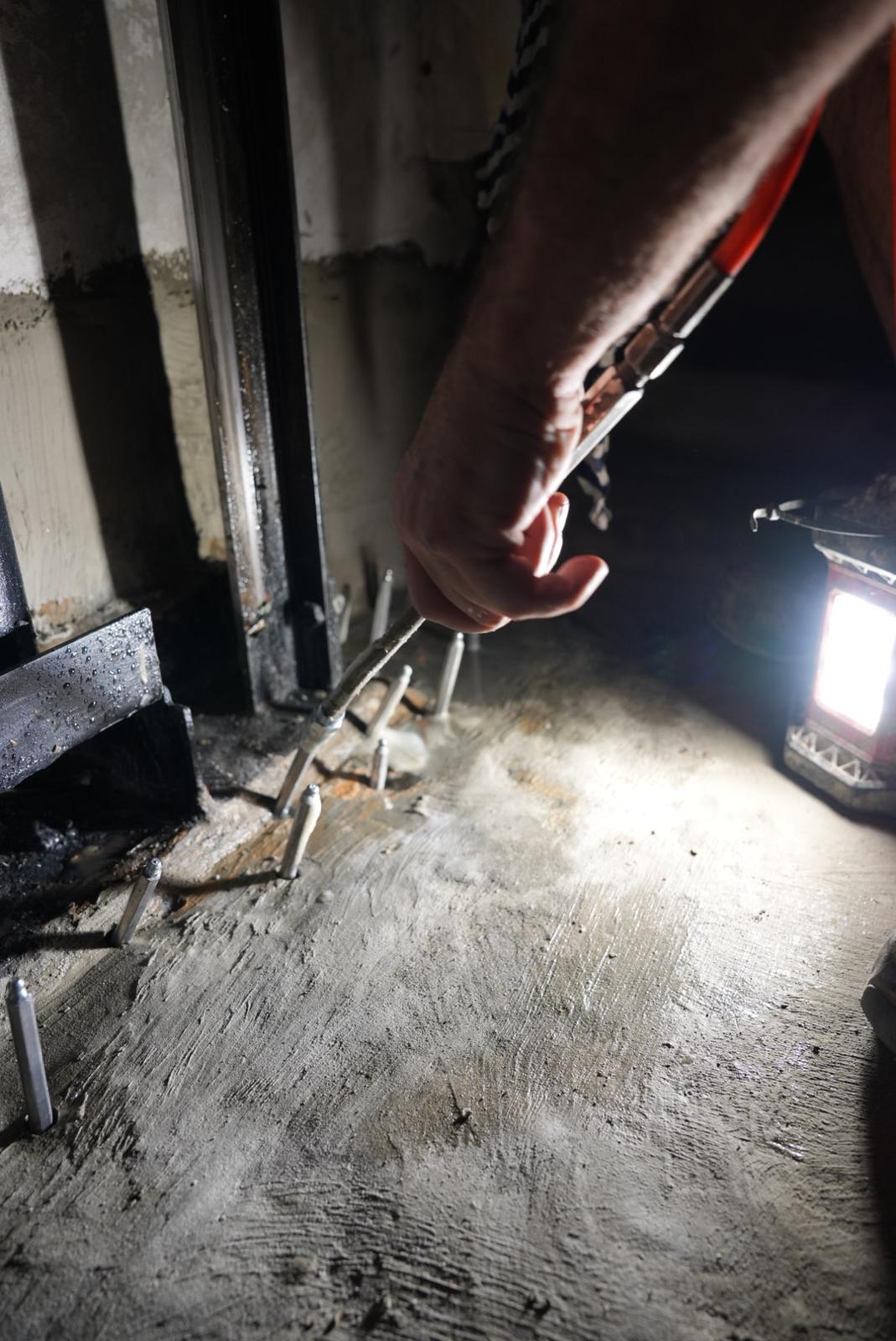
Stop water at the source, not the surface
Concrete leak repair is about sealing cracks, joints and voids from the inside. We use pressure injection to push polyurethane resin directly into the leak path. Once injected, the resin reacts with moisture, expands, and seals the crack completely. Water has nowhere to travel after that.
This method is used for:
- leaking concrete walls
- slab cracks
- wall-to-floor joints
- active water ingress
If water is coming through concrete, this is the repair Google expects from a Concrete Contractor, not a general handyman or maintenance service.
Small cracks turn into big problems fast
Hairline cracks don’t stay small. Once water enters, it spreads through the concrete and finds new paths.
Our concrete crack repair process focuses on stopping that movement. We clean the crack, install injection ports, and inject polyurethane resin under controlled pressure.
This locks the crack shut from inside the concrete, not just at the surface.
It works on vertical, horizontal and overhead cracks.
Used when water is already inside the structure
Injection waterproofing is the best option when:
- water is actively leaking
- external access isn’t possible
- excavation would be costly or disruptive
We commonly use injection waterproofing in Sydney CBD basements, older apartment buildings, and commercial structures where traditional waterproofing isn’t practical.
It’s clean, fast, and works even during wet conditions.
The material that actually stops concrete leaks
Polyurethane resin is designed to work with water, not against it. When injected, it reacts with moisture, expands, and fills cracks, gaps and voids inside the concrete.
Why we use polyurethane resin injection:
- handles building movement
- bonds permanently to concrete
- works with active water flow
- doesn’t shrink or crack later
Most failed repairs we inspect used silicone, cement slurry or surface coatings. Those materials
don’t move with the structure, so leaks return.
Dry basements again, even after heavy rain
Basement leaks usually come from wall cracks, construction joints, or pressure from groundwater pushing through concrete.
Basement leak repair requires relieving that pressure from the inside. Injection waterproofing seals the water path without digging or removing walls.
We repair leaking basements across Parramatta, Hills District, North Shore, Inner West and Western Sydney.
If your basement smells damp, feels cold, or shows water stains, moisture is already inside the concrete.
No dripping, but still damaging
Not all moisture problems show visible leaks. Damp concrete slowly damages the structure and creates conditions for mould.
Basement dampness repair focuses on stopping moisture movement before it becomes a bigger issue. Injection seals the concrete internally and reduces ongoing moisture transfer.
This is common in older homes and units with shared basement walls.
Balcony leaks don’t stay on the balcony
Balcony leaks usually travel through the concrete slab and show up inside rooms below.
Painting a membrane on top doesn’t fix cracks underneath. We repair leaking balconies by sealing cracks inside the slab first using injection. Once water movement stops, surface waterproofing can be applied properly.
This prevents repeat leaks during heavy rain.
Water moves through masonry too
Brick and block walls absorb water over time. When mortar breaks down, moisture tracks through the wall and appears inside.
Block and brick leak repair involves sealing water paths behind the masonry using injection and joint repairs. This is common in older Sydney buildings and boundary walls.
Stop leaks that threaten your lifts and underground structures
Lift shafts are prone to leaks because water naturally flows downward through joints and concrete. Even small cracks can let water into the shaft, creating safety hazards, electrical risks, and mould problems.
Our lift shaft leak repair process uses polyurethane resin injection to seal cracks and joints from the inside. We target the leak paths, even in tight or hard-to-access areas, so water stops at the source.
This method is fast, clean, and doesn’t require removing walls or heavy excavation. It’s used in commercial buildings, apartment complexes, and industrial properties across Sydney.
- Our Process
We Take the Pain Away

Inspection & Diagnosis
We start by carefully inspecting your property to find where the water is really coming from. Cracks, joints, or damp patches can be misleading, so we trace the leak through the concrete and identify the exact path the water is taking. This ensures we fix the source, not just the visible damage.

Injection Repair
Once the leak is mapped, we inject polyurethane resin into the cracks, joints, or voids. The resin reacts with moisture, expands, and permanently seals the leak from the inside. This works even if water is still flowing, which is why it’s far more effective than surface coatings or fillers.

Testing & Finishing
After the injection, we test the area to confirm the leak has stopped. Any drill holes are filled, surfaces smoothed, and if necessary, additional waterproofing applied on exposed slabs or balconies. Finally, we provide a 25-year warranty on materials and workmanship, so you can be confident the problem is fixed for good.
Areas We Service Around Sydney
We regularly provide basement leak repair in:
These surrounding suburbs each present slightly different structural and soil conditions, which is why our repair systems are adapted to local environments across NSW.
Driving Directions to Our Drummoyne Office
- Take Church Street south toward the M4.
- Merge onto A44 (Parramatta Road) toward Sydney.
- Continue for approximately 14 km.
- Turn right onto Victoria Road at Five Dock.
- Continue 3 km toward Drummoyne.
- Our office is on the left near Drummoyne Oval.
- Free parking is available along nearby side streets.
- Approximate drive time: 30–35 minutes.
- Take Devlin Street toward Victoria Road.
- Merge onto Victoria Road (A40) heading toward Sydney.
- Cross the Gladesville Bridge and continue toward Drummoyne.
- Our office is located on the left before the Iron Cove Bridge.
- Parking is available near Birkenhead Point.
- Approximate drive time: 20–25 minutes.
- Take Great North Road toward Victoria Road.
- Turn left onto Victoria Road heading toward the city.
- Continue approximately 2 km.
- Our office is on the left before Drummoyne Oval.
- Street parking is available nearby.
- Approximate drive time: 10 minutes.
- Take Darling Street toward Victoria Road.
- Merge onto Victoria Road heading west toward Drummoyne.
- Continue past the Iron Cove Bridge exit.
- Our office is located on the right-hand side of the commercial strip.
- Parking available near Lyons Road intersection.
- Approximate drive time: 10–15 minutes.
- Take Homebush Road toward Parramatta Road.
- Turn onto Parramatta Road (A44) heading east.
- Turn left onto Victoria Road at Five Dock.
- Continue toward Drummoyne.
- Our office is on the left near Birkenhead Point.
- Free street parking available.
- Approximate drive time: 20–25 minutes.
What Local Clients Say
Still dealing with leaks after every storm?
If water is coming through concrete, surface fixes won’t last.
Injection waterproofing using polyurethane resin stops leaks where they start.
- Call DS Projects today on 1800 727 531.
- Visit us at Suite 2, 109 Victoria Rd, Drummoyne NSW.
- Or request an inspection through https://dspr.com.au.
Permanent solutions. No excavation. Backed by 25 years.